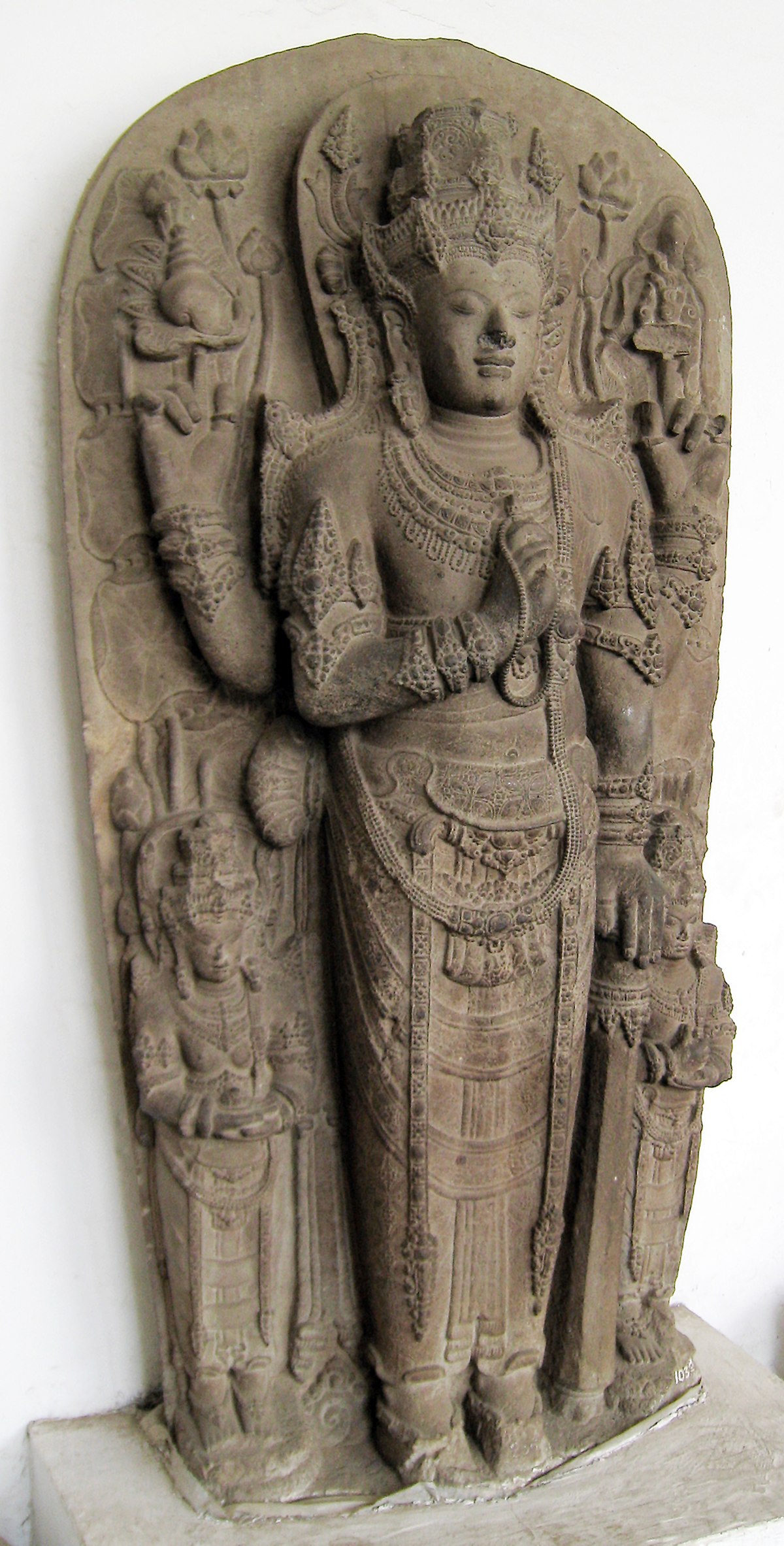
Object Name: Statue of Raden Wijaya depicted as Harihara (half Shiva, half Vishnu deity)
Object Type: Sculpture
Materials: Stone
Dimensions: (Not definitively recorded in open sources; similar Majapahit Harihara statues are often life‑size, ~1.6–1.8 m tall)
Culture Origin: Majapahit period (late 13th – early 14th century, reign of Raden Wijaya, 1293–1309); discovered at Candi Simping, Sumberjati, Blitar, East Java
Exhibition: Permanently exhibited in the Indonesian National Museum (Museum Nasional Indonesia, Jakarta), within the Hindu-Buddhist statuary collection; originally featured in a Majapahit exhibition in the old wing (Gedung Gajah) in 2007
Condition: Good — well‑preserved stone carving showing minimal erosion for its age; relatively intact relief and facial features
Conservation History: Preserved as part of the National Museum permanent collection. Specific conservation treatment history is not detailed in public sources, but Indonesian National Museum has longstanding expertise in stabilizing and restoring Majapahit-era stone sculptures
Preservation Status: Under care of the National Museum of Indonesia
Preservation History: Originally from Simping Temple, Blitar; curated in Jakarta
Retention Policy: Permanent
Archival Location: National Museum of Indonesia
Backup Status: Digitally archived (ASEAN Cultural Heritage Archive)
Parent Collection: Indonesian Kingdoms Collection
Sub Collections: Majapahit Statues
Related Items: Other Majapahit-era statues (e.g. Prajnaparamita of Java)
Accessibility Features: Not specified
Accessibility Compliance: Not specified
Copyright Status: Public domain
Copyright Holder: None
License Terms: Unrestricted educational use, subject to museum policies
Jurisdiction: Indonesia
Cultural Significance: Symbolizes the divine kingship and syncretic Hindu beliefs of Majapahit; a national cultural treasure.
Cultural Context: Reflects artistic, political, and religious practices of 14th-century Java; deification of rulers.
Access Statistics: Regular feature in Indonesian history exhibitions
Citation Information: Raden Wijaya as Harihara Statue, Museum Nasional Indonesia. Source: ASEAN Cultural Heritage Archive.
User Feedback: Recognized as iconic Majapahit sculpture in national heritage
Educational Use: Used in education on Southeast Asian kingdoms, syncretism, and Majapahit art.
Curriculum Alignment: Southeast Asian History, Religion & Art
Learning Objectives: Understand Majapahit history and the role of divine kingship in ancient Indonesia.